
Technique vs. Style: Does the difference matter to us?
We are the ones who get our hands dirty making art. When we are ‘in the zone’ we don’t much care about semantics. We do what we like and like what we do. If you also like what we do then that is a bonus and makes us happy.
But there is another layer to this effort. I am really talking about the difference between technique and style.
Before I go much further, I want to share my bottom line with you. Technique is important. It is fun, creative and, in many ways, the best part of the day. Style, on the other hand, is the way we express our message as artists. It is our signature look. The way that we are different from other artists. It is our brand and as such we need to understand it and protect it.
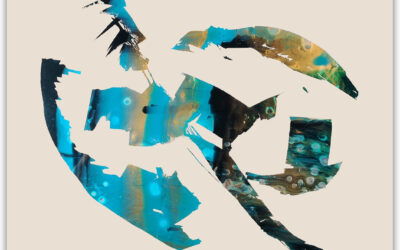
In this post, I want to focus on this difference between technique and style. In other posts, we will talk about, and sometimes demonstrate, the techniques we use. At other opportunities, we will talk about our work in terms of style. These include some of Kevin’s photography projects, our Fluid Acrylics, our Glassworx style and Diana’s Dianoramas.
To differentiate style and technique you need to explore the meaning of each.
It is important to experiment and learn about materials, methods and media. This is working on technique. Technique is amazing and provides all of the flash and magical wizardry that entrances the audience. To me, making magic with art is wonderful. Technique is important. It should be explored, practiced and perfected.
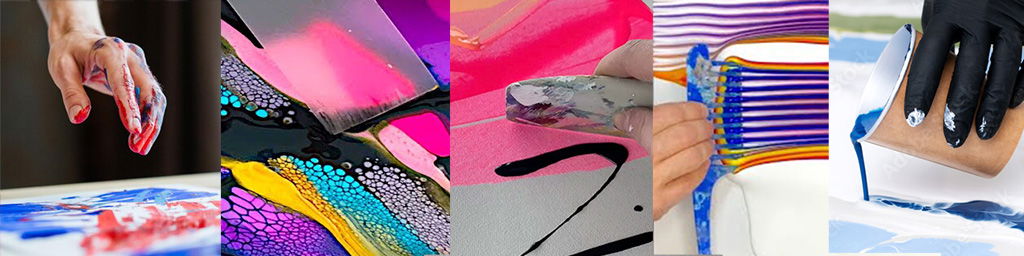
An example of technique is how paint is applied. There is a range of paints, solvents, colours and pigments to choose from. Then there is a range of tools and techniques to use to apply that paint to a range of materials to paint on. To some, the way that paint is applied by each individual artist is as individual as their handwriting. Each combination of materials and application methods adds up to a technique. These techniques can be learned and perfected through instruction and practice. They also can change with the emergence of new materials and methods. At the end of the day, they are just techniques. The artistry lies in what you do with your techniques. It is like being able to talk but with nothing to say.
This leads to the meaning of style. Style happens when artists are purposeful, considered and consistent in the visual message they express. Style transcends technique in the sense that style can be expressed consistently using a number of different techniques. I am generalizing in this discussion and so there are going to be examples where my distinctions will not apply. I think it is important to make these generalizations anyway. We need to appreciate when we are just playing with or perfecting our technique versus when we have defined a style. I think that the most important difference relates to thoughtful consideration, in other words, philosophy. Style is defined by a philosophy, technique is not. Both technique and style can be shared between artists but when two artists share a technique they are sharing how to do something. When they share a style they are sharing why they are doing something.
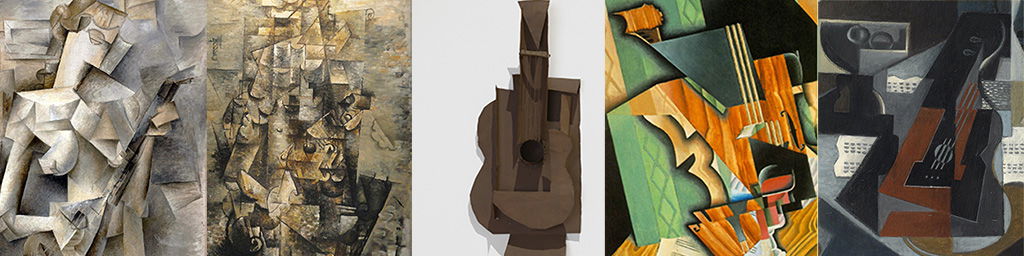
I don’t want to make this a blog about any particular style but as an example of my perspective of the meaning of style I will refer to Cubism. The montage above includes excerpts from several cubist artworks. Cubism is a style (some would label it a movement and there were several significant offshoots) that is based on a limited set of ideas which many artists – most notably Picasso and Braque – have explored artistically. The same ideas were explored by different artists and using different techniques on different media.
The montage includes excerpts from five images. From left to right, the painters are Picasso, Braque, Picasso, Gris and Metzinger. Most are oil on canvas but the middle image by Picasso is made from sheet metal. While I am not sure of the pieces I selected you can see the degree to which cubism led naturally to mixed media and collage. Many of the earliest collage or mixed media works were cubist. Picasso made many which I could have used but I wanted to include other artists in the montage. This demonstrates that a single style – linked by ideas – can be expressed with many techniques,
I think that we are still working on the philosophy of Glassworx. I know that it is exploring the concept of duality: here and there, now and then, foreground and background, figure and ground. With Glassworx we are creating strong contrasts between a plain-looking, modest, neutral background and an exciting, colourful, vibrant foreground. The fact that we create the background first makes us more conscious and considerate of the contrast, the composition and the visual meaning we are trying to express.
So the answer to the opening question is: yes, there is a difference between technique and style and; yes, it matters to us.

0 Comments